Trip to Kütahya
Zonguldak
City of Labor
History of the City of Zonguldak
The history of Zonguldak as an urban center is much younger than the history of the region itself. The formation of the city began with the development of coal deposits in the area.
With the start of mining operations, both local and foreign investments entered the basin. As new coal mines were opened, economic and social conditions emerged that contributed to the formation of a new settlement. In official correspondence up until 1896, Zonguldak was referred to as “the locality called Zonguldak,” subordinate to Ereğli.
After the construction of the breakwater in the port of Zonguldak in 1893, the area began to develop rapidly, with a significant increase in both population and buildings. The older village of Gaca maintained its importance, while Zonguldak, which was part of the Elvan village area, gained the status of kaza (district) in 1899. Until 1920, Zonguldak was administered as a kaza.
With the increase in mining and ore trade, along with improving economic conditions, the city’s population and infrastructure grew. On June 1, 1920, Zonguldak was removed from the kaza category and became a mutasarriflik (district governed by a senior administrator). After the War of Independence and the proclamation of the Republic, the region received due attention, and on April 1, 1924, Zonguldak became the first province established during the republican period.
Geographical Location
Zonguldak is a province in the Western Black Sea region, bordered by the Black Sea to the west and north. With an area of 3,310 km², it accounts for about six-thousandths of Turkey’s total land area. It borders the Black Sea to the north, Bartın to the northeast, Karabük to the east, Bolu to the south, and Düzce to the west. Administratively, the province includes the central district as well as Alaplı, Çaycuma, Devrek, Gökçebey, Karadeniz Ereğli, Kilimli, and Kozlu districts.
Topography
Zonguldak Province has a highly rugged terrain: 56% of the area consists of mountains, 31% of plateaus, and 13% of plains. The land, dissected by river valleys, mainly consists of mid-altitude mountain ranges. Due to abundant rainfall, Zonguldak is rich in surface water resources. Apart from the Filyos River, there are no major rivers, but many small streams form a dense network.
Climate
Zonguldak is influenced by a temperate Black Sea climate. There is no dry season; all seasons are mild and rainy, with the highest precipitation occurring in autumn and winter. There are no significant temperature differences between seasons or between day and night; however, as one moves inland from the coast, the climate becomes harsher.
Coal
The economic structure of Zonguldak is mainly shaped by its natural resources. It is one of the few provinces where the non-agricultural sector plays a leading role. Zonguldak is rich in minerals: in addition to hard coal, there are deposits of bauxite, iron, manganese, barite, dolomite, limestone, quartzite, and slate. Among these, manganese, limestone, and slate are actively mined.
Places to visit
1. Gökgöl Cave
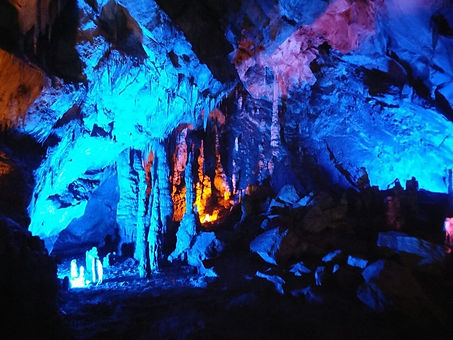
Gökgöl Cave is an active cave with stalactite formations located in the Üzülmez district of Zonguldak.
Including its branches, Gökgöl Cave has a total length of 3,350 meters, making it the tenth longest cave in Turkey, and with its 875-meter walking path, it is the largest cave in Turkey open to visitors.
Located at the 4th kilometer of the Zonguldak–Ankara highway, the cave features all types of stalactite formations — stalactites, stalagmites, columns, “flag” stalactites, and “macaroni” stalactites. During the rainy season, an underground river with a rising water level flows through the cave, discharging into the Erçek stream through a natural siphon.
2. Mining Museum
To commemorate the coal mining culture, which has been a vital source of production for the region and left traces in all areas of life, the Zonguldak Mining Museum was established upon the proposal of the governorship and with the approval of the ministry.
Built on an area of 6,932.79 m², the museum was officially opened on December 9, 2016.
3.Çanakçılar Zoo
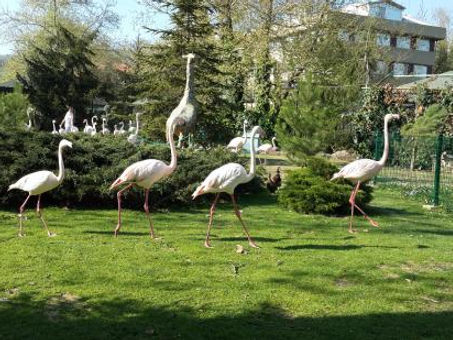
In the zoo and botanical garden located on 30 decares of the open production area covering 140,000 m² within the Çanakçılar Complex in Gökçebey (Zonguldak), there are 850 animals of 75 different species and dozens of plant species.
This area is open to all nature lovers — from adults to children — allowing visitors to enjoy the beauty of animals and nature up close.
4. Filyos Beach
Filyos Beach is also the place where the Filyos River flows into the Black Sea. The river passes through the town and empties into the sea.
The oldest known name of the town is Tion; later it was called Hisarönü, and eventually became known as Filyos after the river.
The history of the place dates back to pre-Christian times. Being a coastal settlement, it was once known as a commercial center with active trade, which brought a high level of prosperity to the region.
5. Cehennemağzı Caves
The last and most difficult of the Twelve Labors of Heracles (Hercules), symbolizing human endurance and strength against nature, was to capture Cerberus, the dog of Hades, from the Underworld, a place no mortal had ever returned from.
Heracles arrived in Ereğli with the Argonauts, who were searching for the Golden Fleece, and with the help of Hermes and Athena, brought Cerberus to the surface. Upon seeing the creature, King Eurystheus was terrified, and Heracles returned Cerberus to the Underworld.
The place where Heracles descended to seize Cerberus is believed to be the Cehennemağzı Caves.
It is known that one of the two major oracle centers of antiquity was located in these caves (the other being Delphi in Greece).
According to another legend, the daughter of a city ruler fell in love with a young servant. They ran away and hid in a chamber inside the caves. A demon of the underworld protected them from outside dangers. Unable to enter the cave, the ruler shouted to them, “Turn to stone!” — and they turned into stone.
The first cave, also known as the “church cave”, with its columns, capitals, mosaic floor, and lamp niches, was used by early Christians as a secret place of worship during the period of pagan domination when Christianity was forbidden. The interior remains are decorated with motifs reflecting features of the early Christian period.